Prepaid Offer — Save ₹50 on every prepaid order PREPAID10•Free Shipping on all orders across India•GMP Certified · Ayurvedic Lic. 1077/ISM/HR•Prepaid Offer — Save ₹50 on every prepaid order PREPAID10•Free Shipping on all orders across India•GMP Certified · Ayurvedic Lic. 1077/ISM/HR•



Blog
Vitamin C Serum Benefits for Skin: Ingredients, Uses & How to Apply
Have you ever looked in the mirror and felt that your skin looks a little tired, even when you are following a skincare routine? Perhaps your complexion appears dull, your skin feels dry, or old acne marks seem to take longer to fade than expected.
These concerns can make choosing skincare confusing. With so many serums available, it is difficult to know which ingredients are worth considering and how to use them correctly.
One ingredient that has gained attention in everyday skincare is Vitamin C. It is widely used in facial serums designed to support a brighter-looking complexion and provide antioxidant care.
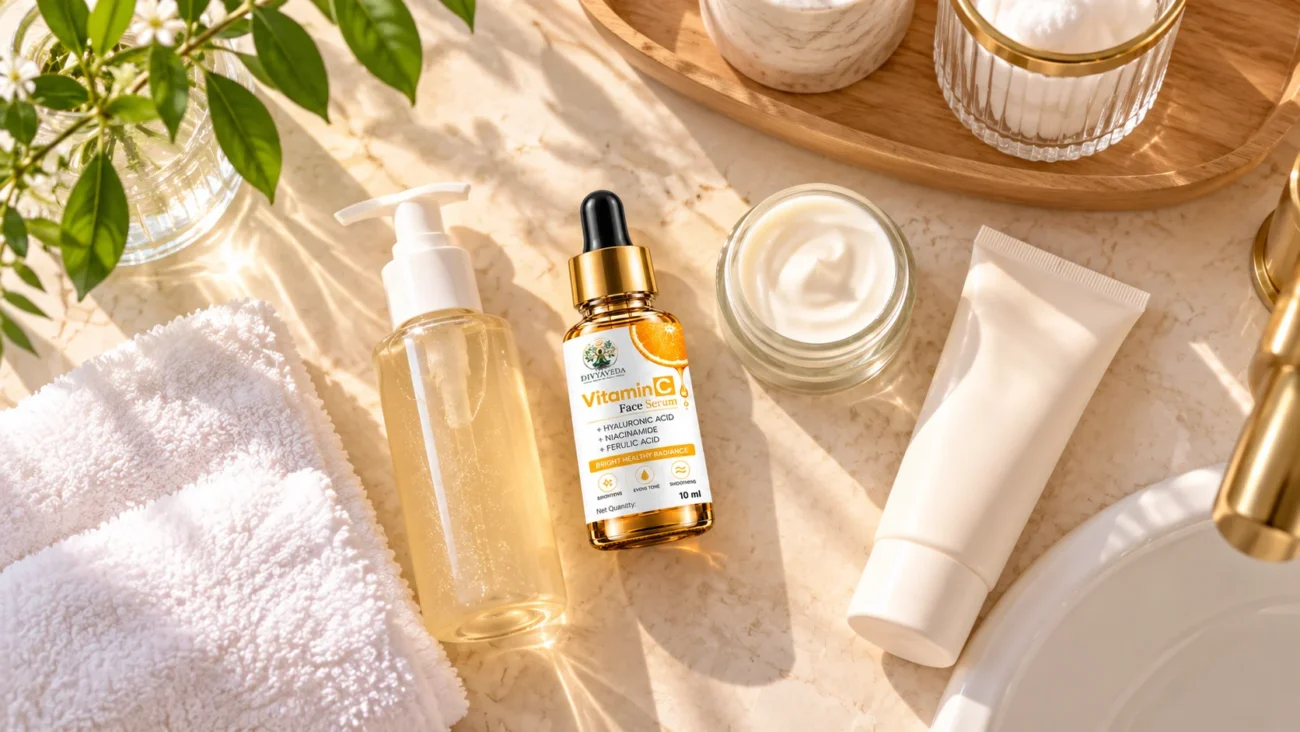
Divyaveda Vitamin C Face Serum combines Vitamin C with Hyaluronic Acid, Niacinamide and Ferulic Acid. Understanding what these ingredients do can help you decide whether this type of serum belongs in your skincare routine.
In this guide, we will explore common skin concerns, the role of Vitamin C, how supporting ingredients work, the correct application order, and what to consider before choosing a serum.

Why Does Your Skin Sometimes Look Dull or Uneven?
Your skin’s appearance can change with the weather, daily habits, sun exposure, and the products you use. Before choosing a serum, it helps to understand what might be contributing to your concern.
When your face looks tired or lacks radiance
Dryness, environmental exposure, and an inconsistent skincare routine can affect the way your complexion looks. Skin may appear less smooth or seem to lack its usual freshness.
A suitable skincare routine that includes gentle cleansing, moisturization, and ingredients chosen for your needs may help improve the appearance of dullness.
When dark marks remain after acne
A pimple may disappear, but a darker mark can remain after the inflammation settles. These marks are not necessarily active acne, and they may need a different approach from products designed to treat breakouts.
Vitamin C is used in some cosmetic products to help improve the appearance of certain dark spots. The results depend on the cause of the marks, the formula, and consistent sun protection.
When your skin feels dry or rough
Skin that lacks moisture may feel tight, look flaky, or appear less smooth. In this situation, hydration deserves attention alongside other skincare goals.
Adding a suitable hydrating product and moisturizer may help your skin feel more comfortable. A serum should complement your routine rather than replace every other skincare step.
What Does Vitamin C Serum Actually Do?
Vitamin C is an antioxidant ingredient used in facial skincare. Antioxidants help counter free radicals associated with oxidative stress from environmental factors.
Vitamin C also plays a role in collagen formation. In topical skincare, appropriately formulated Vitamin C products may help improve the appearance of dullness and certain types of uneven pigmentation.
However, the results are influenced by more than the ingredient name. The form of Vitamin C, its concentration, the stability of the finished formula, and your individual skin needs all matter.
A Vitamin C serum should therefore be viewed as one part of a skincare routine, not as an instant solution for every skin concern.
Vitamin C Serum Benefits for Everyday Skincare
1. For a Brighter-Looking Complexion
If your skin looks less radiant than you would like, Vitamin C may be an ingredient worth considering.
It is commonly used in products intended to improve the appearance of dull skin. With an appropriate formula and consistent skincare habits, it may help your complexion look fresher over time.
The aim is to support your skin’s natural appearance, not to change your natural skin color.
2. For the Appearance of Dark Spots
Dark marks can have several causes, including previous acne and sun exposure. Vitamin C may help improve the appearance of certain forms of pigmentation when used in a suitable topical formula.
It cannot guarantee that all marks will disappear. Persistent pigmentation, melasma, or spots that change in appearance should be assessed by a dermatologist.
3. For Antioxidant Care
Environmental exposure is one reason antioxidants are included in skincare routines. Vitamin C can be part of a routine intended to care for the skin’s appearance.
Remember that antioxidant skincare does not replace sunscreen. Protecting your skin from excessive sun exposure remains an important everyday habit.
4. For a Smoother-Looking Appearance
Skin that is dehydrated may look rough or feel uncomfortable. A routine that supports hydration can help improve the appearance of dryness.
Vitamin C is not a substitute for moisturizer, so it is useful to consider the supporting ingredients in your serum and the other products you use.
5. As Part of a Skin-Ageing Care Routine
Vitamin C plays a role in the body’s collagen formation, which is one reason it is used in products designed for skin-aging concerns.
Topical Vitamin C may help improve the appearance of certain fine lines and uneven pigmentation, although the outcome varies by formulation and individual. No serum can stop the natural aging process.
Understanding the Ingredients in Divyaveda Vitamin C Face Serum
Choosing a serum becomes easier when you understand why its ingredients are included. Divyaveda Vitamin C Face Serum features four key ingredients: Vitamin C, Hyaluronic Acid, Niacinamide and Ferulic Acid.
Vitamin C: An Antioxidant Ingredient
Vitamin C is valued for its antioxidant properties and its role in collagen formation. It is commonly used in skincare products designed for dull-looking skin and the appearance of uneven pigmentation.
Different forms of Vitamin C have different formulation requirements. The concentration and stability of the finished product can influence its performance, so it is worth checking the verified ingredient information rather than assuming all Vitamin C serums are alike.

Hyaluronic Acid: For Hydration
Hyaluronic Acid is used in skincare because it attracts and retains water. This helps support skin hydration and may make the skin feel more comfortable.
If your face often feels tight after cleansing, a hydrating ingredient may be a useful addition to your routine. You may still benefit from a moisturizer, depending on your skin type and environment.
Niacinamide: For Skin Barrier Support
Niacinamide, also known as Vitamin B3, is a popular skincare ingredient. Depending on its concentration and formulation, it may help support the skin barrier and improve the appearance of uneven tone.
It can be used alongside Vitamin C in a properly formulated routine. If you have sensitive skin, introduce products gradually so that you can observe how your skin responds.
Ferulic Acid: Another Antioxidant
Ferulic Acid is an antioxidant used in some skincare formulations. Formulators may combine it with other antioxidants to support the performance or stability of certain ingredient combinations.
Its role depends on the complete formula. The presence of Ferulic Acid alone does not guarantee a particular skincare result.
Why the Complete Formula Matters
A serum is more than a list of ingredients printed on a bottle. The form and concentration of the ingredients, the formulation process, packaging, and storage instructions all matter.
Divyaveda Vitamin C Face Serum brings together the four ingredients in a 30 ml dropper bottle. Before use, review the complete ingredient list and the directions on the actual product packaging.
Explore Divyaveda Vitamin C Face Serum: [Insert the verified product page URL]
How to Use Vitamin C Serum on Your Face
A good skincare routine should be simple enough to follow regularly. You do not need to add multiple products at once to get started.
Step 1: Cleanse Your Face
Wash your face with a gentle cleanser that suits your skin. Remove dirt, excess oil, and other residue, then pat your skin dry without rubbing harshly.
Step 2: Apply Vitamin C Serum
Use the amount recommended on the product label. Spread the serum gently over the intended areas and avoid direct contact with your eyes, eyelids, lips and broken skin.
Applying more than the recommended quantity does not necessarily improve results.
Step 3: Apply Moisturiser
Choose a moisturizer according to your skin’s needs. This helps support hydration and skin comfort.
Step 4: Finish with Sunscreen in the Morning
If you apply the serum during the day, follow it with broad-spectrum sunscreen with SPF 30 or higher. Reapply according to the sunscreen instructions, especially when spending time outdoors.
A Vitamin C serum does not provide the same protection as sunscreen.
Should You Use Vitamin C Serum in the Morning or at Night?
The suitable time depends on the serum’s directions and your existing skincare routine.
Morning routine
- Gentle cleanser
- Vitamin C serum, as directed
- Moisturiser
- Broad-spectrum sunscreen
Evening routine
- Cleanser
- Vitamin C serum, if suitable according to the product directions
- Moisturiser
Morning use is convenient because antioxidant skincare can complement a daytime sun-protection routine. However, you still need sunscreen.
If you are new to Vitamin C, start according to the product instructions. Avoid introducing several unfamiliar active ingredients at the same time.
Is Vitamin C Serum Suitable for Your Skin Type?
Skin type can help guide your choice, but the complete formulation and your individual sensitivity also matter.
For dry skin: Look for a routine that supports moisture and comfort. Hyaluronic Acid may provide additional hydration support.
For oily skin: Consider how the formula feels on your face and whether it fits comfortably into your current routine.
For combination skin: Observe how both the drier and oilier areas respond after introducing a new product.
For sensitive skin: Check the complete ingredient list and patch test before regular use. Stop using the serum if significant irritation develops.
For skin with acne marks: Vitamin C may help improve the appearance of certain dark marks, but it does not necessarily treat active acne or deep scars.
If you have an ongoing skin condition, persistent irritation or uncertainty about which products to combine, consult a dermatologist.
How Long Does Vitamin C Serum Take to Show Results?
There is no single timeline that applies to every product or every person.
You may notice changes in how hydrated your skin feels before seeing a difference in the appearance of dark spots. Changes in pigmentation may take several weeks or longer, and some concerns may need a different treatment approach.
Your results can depend on:
- The form and concentration of Vitamin C
- The stability and quality of the complete formula
- How consistently you use the product
- Sun exposure and sunscreen habits
- The original cause of the skin concern
- Your skin type and sensitivity
Use the serum according to its directions and assess your skin realistically. Be cautious of products promising overnight glow, permanent removal of pigmentation or guaranteed results.
Common Mistakes to Avoid When Using Vitamin C Serum
Using More Product Than Recommended
Applying extra serum will not necessarily make it work faster. Follow the directions printed on the packaging.
Skipping Sunscreen
Sun exposure can contribute to pigmentation and other skin changes. Include sunscreen in your daytime routine even if you use Vitamin C.
Starting Too Many Products Together
Using several new products at once makes it difficult to identify the cause if irritation develops. Introduce them one at a time.
Ignoring Skin Reactions
Persistent burning, itching, swelling or redness should not be ignored. Discontinue use if a significant reaction develops and seek medical advice if necessary.
Storing the Serum Incorrectly
Some Vitamin C formulations can be affected by heat, air or light. Keep the container closed and follow the manufacturer’s storage instructions.
If the product develops an unexpected change in colour, smell or texture, check the manufacturer’s guidance before continuing use.
Frequently Asked Questions About Vitamin C Serum
1. What is Vitamin C serum used for?
Vitamin C serum is commonly used for antioxidant support and to improve the appearance of dullness and certain types of uneven pigmentation.
2. Can Vitamin C serum help with dark spots?
It may help improve the appearance of some dark spots over time. Results depend on the cause of pigmentation, the formula and sun-protection habits.
3. Can I use Vitamin C serum every day?
Many Vitamin C serums are intended for regular use. The appropriate frequency depends on the formula and your skin’s tolerance, so follow the product label.
4. Should I apply serum before or after moisturiser?
In a typical skincare routine, apply serum after cleansing and before moisturiser. Follow the product instructions if they specify a different application method.
5. Can Vitamin C and Niacinamide be used together?
They can generally be used together in a properly formulated skincare routine. If your skin is sensitive, introduce new products gradually.
6. Do I need sunscreen after applying Vitamin C serum?
Yes. Vitamin C serum is not sunscreen. Use broad-spectrum SPF 30 or higher during the day and reapply as directed.
7. Can Vitamin C serum help with acne marks?
It may help improve the appearance of certain dark marks left after acne. It will not necessarily treat active acne or deep scars.
8. Is Vitamin C serum suitable for oily skin?
It may be suitable if the formula agrees with your skin. Introduce it carefully and monitor for irritation or unwanted reactions.
9. How should I store Vitamin C serum?
Follow the storage instructions on the packaging. Keep the container closed and avoid exposing it to unsuitable heat or direct sunlight.
10. What should I check before choosing a Vitamin C serum?
Review the form and concentration of Vitamin C, the complete ingredient list, packaging, usage directions and suitability for your skin. A higher concentration is not automatically the right choice for everyone.
Discover Divyaveda Vitamin C Face Serum
Finding a suitable skincare product starts with understanding your needs rather than following every new trend. If your goal is to care for dull-looking skin, support hydration or improve the appearance of uneven tone, learn about the ingredients before choosing a serum.
Divyaveda Vitamin C Face Serum combines Vitamin C, Hyaluronic Acid, Niacinamide and Ferulic Acid in a 30 ml dropper bottle. It offers an option for people who want to include these skincare ingredients in a straightforward daily routine.
Review the full ingredient information, follow the product directions and introduce the serum according to your skin’s needs.
Explore the product: [ Divyaveda Vitamin C Face Serum ]
Consistent care, gentle cleansing, suitable moisturisation and regular sun protection are useful foundations for maintaining healthy-looking skin.